

AI SEO 2026 Checklist: How to Optimize for AI Search
In 2026, more customer journeys begin with a question to an AI assistant than with a traditional search query in a browser. People ask ChatGPT, Gemini, Perplexity, Copilot or Google Search with AI Overviews to research, compare and choose.
If your brand is not part of the answers those systems give, you are invisible at the exact moment customers are deciding.
This guide gives you a step by step AI SEO 2026 checklist so you can optimize for AI search, AI Overviews and answer engines, not just blue links.
What is AI SEO in 2026 and why it matters
Definition box: AI SEO and SEO for AI search assistants
AI SEO
AI SEO is the process of improving your content and site so that search engines and AI driven discovery tools can better understand, trust and surface your brand in their results. In 2026 this includes classic search results and generative features like Google AI Overviews, as described in resources such as Search Engine Land’s guide to AI SEO and Google’s Search documentation on AI features.
SEO for AI search assistants
SEO for AI assistants is a focused subset of AI SEO. It is the practice of shaping your content, entities and technical setup so that conversational systems like ChatGPT, Gemini, Perplexity and Copilot are more likely to mention, cite and recommend your brand in their answers.
In 2026, that distinction matters because:
- People ask AI assistants more complex, multi step questions.
- AI systems pull from many sources at once, not just the top ten search results.
- Answers are synthesized, so your brand must be clear, consistent and authoritative across the web to be chosen as a source.
According to Google’s documentation on AI features, AI Overviews are generated from the same index as regular search, and the same SEO best practices apply. What changes is how information is combined and presented. Instead of a list of links, users see a synthesized overview that may cite a handful of pages.
Other assistants, such as independent chatbots and research tools, crawl and license web content in different ways, but they all rely on the same fundamental signals:
- Can they understand what you are about at an entity level?
- Do you cover topics in enough depth?
- Are you trusted and cited by other authoritative sources?
- Is your content structured so a model can parse and reuse it safely?
That is what AI SEO in 2026 is really about.
What is SEO for AI?
SEO for AI is the practice of making your brand the easiest and safest choice for an AI system to use in its answer.
Concretely, that means:
- Describing your brand, products and topics in consistent, machine readable ways.
- Covering the full intent around a topic, not just one keyword.
- Providing clear explanations, definitions, steps and FAQs that can be quoted or summarized.
- Building external and internal signals of authority so models can trust you when generating text.
You are not optimizing a single ranking algorithm. You are optimizing for how large language models build and justify answers.
Core principles of AI SEO 2026
The strategic pillars of AI SEO in 2026 are different from classic keyword chasing. They center on entity authority, intent and usefulness.
1. Entity authority and topical depth
AI systems model the world as entities (people, brands, products, problems, locations) and relationships between those entities. In that context:
- Your brand is an entity.
- Each product or solution is an entity.
- Each core topic you want to own is an entity.
To be chosen as a source, you need to be recognized as an authority entity on the topics that matter to your business. Work from resources on entity based SEO and topical clustering, like contemporary AI SEO strategy guides, and focus on:
- Covering a topic through a cluster of interlinked pages, not just a single post.
- Building structured data around core entities, like Organization, Product and LocalBusiness schema.
- Earning mentions and citations in other authoritative content.
2. Intent driven keywords, LSI and long tail context
In 2026, keyword lists without intent are almost useless. AI models interpret user questions based on:
- Search intent (informational, navigational, transactional, local, comparative).
- Contextual terms around the main keyword (often called LSI or semantically related phrases).
- Long tail patterns that indicate specific needs.
Technical SEO guides such as Svitla’s SEO best practices and Salesforce’s AI for SEO guide recommend:
- Mapping each keyword to an intent and a stage in the customer journey.
- Using semantically related concepts naturally, not as keyword stuffing.
- Targeting long tail phrases that reflect natural questions and comparisons.
3. Satisfying intent beats chasing blue links
For AI SEO, success is not “ranking in position 1”. It is:
- Being cited or mentioned in AI answers.
- Influencing the narrative and recommendations that an assistant gives.
- Driving qualified visits, brand searches and conversions after an AI interaction.
That shifts the focus from “how do I beat this competitor on this keyword” to “how do I fully answer the user’s underlying question better than anyone else”.
Comparison: Traditional SEO vs AI SEO 2026
- Traditional SEO focus:
- Single keywords and exact match phrases.
- Individual page rankings.
- Click through rate on blue links.
- On page optimization per URL.
- Link building as a primary authority signal.
- AI SEO 2026 focus:
- Entities, topics and relationships between them.
- Topical clusters and brand level authority.
- Being cited or summarized in AI Overviews and assistants.
- Structured, reusable content formats (definitions, steps, FAQs).
- Holistic authority signals including mentions, schema, sentiment and consistency across the web.
AI SEO 2026 checklist: site and technical foundations
Search focused AI features still rely on solid technical SEO. Google’s AI features documentation and AI era SEO guides from practitioners stress that you do not need a special markup for AI Overviews, but you do need a crawlable, fast, structured site.
Use this technical checklist as a starting point.
Table 1: Core technical AI SEO 2026 tasks
| Task | Primary owner | Frequency |
|---|---|---|
| Validate robots.txt to allow search and key AI crawlers while blocking sensitive paths | SEO lead / DevOps | Quarterly and after major changes |
| Maintain XML sitemaps for main content types (pages, blog, products, locations) | SEO lead / CMS admin | Monthly |
| Use semantic HTML (proper headings, lists, tables) for all content pages | Front end dev / Content team | Ongoing for all new content |
| Implement structured data (Organization, Product, Article, FAQ, LocalBusiness, Breadcrumb where relevant) | SEO lead / Developer | Ongoing, audit twice yearly |
| Optimize Core Web Vitals (LCP, CLS, INP) and mobile usability | Front end dev | Quarterly |
| Ensure HTTPS, canonical tags, and clean URL structure | Developer / SEO lead | Initial setup, review yearly |
| Set clear hreflang and language attributes for international content | SEO lead / Developer | At launch, then as markets added |
| Log and monitor crawl errors and 4xx/5xx in Search Console and server logs | SEO lead | Monthly |
| Implement clear 301 redirects for content changes and consolidations | Developer / SEO lead | As needed |
| Monitor and update privacy and AI usage policies in line with AI crawlers and legal requirements | Legal / Product / SEO lead | Yearly, or when policies change |
Additional AI specific technical actions
-
Robots.txt and AI crawlers
- Ensure you are not unintentionally blocking search engine crawlers that power AI features, such as Googlebot and Bingbot, for important sections.
- Review whether to allow or disallow other AI specific crawlers (for example Perplexity’s or similar) in line with your legal and content strategy.
-
Semantic HTML and content structure
- Use proper heading levels (H1, H2, H3) that reflect the logical outline of your content.
- Use ordered and unordered lists for steps and checklists.
- Use tables for comparisons and structured data that models can easily parse.
-
Site speed and UX
- Follow performance and mobile best practices gathered in contemporary technical SEO guides, focusing on fast load, responsive design and accessible layouts.
- Remember that a better UX signals quality to search engines, which influences whether your pages are trusted enough to feed AI features.
-
AI Overview preparation
- Align with Google’s advice that AI Overviews are powered by the same index and signals as regular search, then double down on clarity, freshness and factual accuracy.
- Keep high quality, up to date evergreen content on your key topics that an AI Overview would choose as a reference.
- Avoid misleading or contradicting information across your own pages, since generative systems are sensitive to inconsistencies.
AI SEO 2026 checklist: content, entities and topical clusters
Technical foundations make you eligible to be seen. Topical authority and entity clarity make you eligible to be chosen.
Use this two part checklist: first for topical clusters and internal linking, then for local AI SEO and AI Overviews.
Checklist: building topical clusters and internal linking
-
Choose 3 to 7 core topics you want to own
- Each topic should map to a major business offering or problem your audience cares about.
- Example: “AI SEO for ecommerce”, “local AI search optimization”, “AI visibility measurement”.
-
Create a pillar page for each topic
- Broad, 2 000 to 3 000 word overview that defines the topic, explains benefits, outlines subtopics and links to deep dives.
- Use clear headings, definitions, FAQs and a table of contents.
- Add schema types like Article and FAQ where appropriate.
-
Map and create supporting cluster content
- For each pillar, list subtopics and intents: how to guides, comparisons, checklists, glossary entries, use cases.
- Use keyword and intent research to capture long tail and related questions.
- Ensure each cluster page answers a distinct user intent in depth.
-
Implement strategic internal linking
- From pillar to every cluster article, and from every cluster article back to the pillar.
- Cross link between related cluster pages to show relationships between entities and subtopics.
- Use descriptive anchor text that reflects the entity or topic, not generic “click here”.
-
Model entities clearly in content
- Define key concepts with short, repeatable definitions that AI systems can reuse.
- Use consistent naming for your brand, products and frameworks.
- Where suitable, add schema types like Product, Service or Organization with rich attributes.
-
Add LSI rich sections and structured Q&A
- Dedicate sections to “Key terms”, “Related concepts” or “Alternatives” to bring in semantically related phrases.
- Add FAQ blocks directly answering common questions about the topic, formatted as concise Q&A.
- Consider dedicated glossary or definition pages for important entities.
-
Maintain and refresh clusters quarterly
- Update statistics, examples and screenshots.
- Add new FAQs based on customer support and search queries.
- Consolidate thin or overlapping articles into stronger hub content.
Decision framework: which topics to prioritize first
When choosing which topical cluster to build next, prioritize topics that score high on both:
- Business value (leads, revenue, strategic importance).
- AI intent coverage (how often they show up in AI assistant questions and answers in your space).
You can quickly estimate AI intent coverage by sampling prompts in major assistants and seeing which topics already produce rich AI Overviews or multi source answers.
Checklist: local AI SEO and AI overview optimization
Local and “near me” questions are heavily mediated by AI features in 2026. To appear in those answers, follow this additional checklist, reflecting best practices highlighted in local AI SEO resources.
-
Optimize and unify business data
- Ensure Google Business Profile, Apple Business Connect and Bing Places are complete and consistent.
- Match NAP (name, address, phone) data exactly across major directories.
-
Implement LocalBusiness schema
- Add LocalBusiness or a subtype (Restaurant, MedicalClinic, etc.) to location pages.
- Include opening hours, service areas, coordinates, and sameAs links to profiles like Google Maps.
-
Build city and service area pages with real value
- Create pages that explain services, local context, FAQs and testimonials for each key area.
- Avoid thin “doorway” pages. Focus on genuine local information.
-
Create local FAQs and Q&A content
- Add Q&A style content that matches how local users ask questions, such as “best [service] in [city] for [use case]”.
- Surface parking, access, insurance or pricing policies in plain language.
-
Encourage high quality reviews and response patterns
- Ask satisfied customers to review you on Google and other relevant platforms.
- Respond to reviews with context and keywords that reflect your services and specialties.
-
Check how AI assistants answer local queries
- Ask tools like Gemini, Perplexity and ChatGPT about “best [service] in [city]” and see if your brand appears.
- Note which sources they cite and where your data might be missing or inconsistent.
-
Maintain freshness for local and practical information
- Update holiday hours, menu changes, insurance partners, or local regulations as they change.
- AI systems are more likely to trust and surface recently updated, factual local content.
Tools, workflows and prompts to optimize for AI search
You can and should use AI to optimize for AI search, as long as humans lead the strategy and quality control. Guides from Salesforce and others outline how AI can accelerate keyword research, ideation and on page optimization.
1. Using AI for keyword and intent research in 2026
Blend classic tools and AI assistance:
- Use traditional SEO tools for base demand data and SERP features.
- Feed top keywords, your products and target audiences into an AI system to:
- Group keywords by intent and journey stage.
- Suggest long tail variants that sound like natural questions.
- Propose topical clusters and subtopics.
Example prompt idea:
“Here is a list of 200 SEO keywords for [industry]. Group them by user intent and funnel stage. For each group, suggest 5 natural language questions that a user might ask an AI assistant, and map them to potential article or guide topics.”
2. Prompts to test how AI assistants describe your brand
Use AI assistants themselves as a visibility diagnostic. For each major assistant, ask:
- “What are the leading [category] providers for [audience or use case] in [region]?”
- “Who are the main competitors of [your brand]?”
- “How would you describe [your brand] to a potential customer?”
- “Which brands are most often cited as experts in [topic]?”
- “Based on your training data, what do customers like and dislike about [your brand]?”
Document:
- Whether you are mentioned or cited.
- Which pages or external sites are referenced.
- Sentiment and positioning relative to competitors.
These are the exact patterns that specialized AI visibility partners like U&AI analyze at scale, tracking how often and in what context different AI systems mention a brand compared with its competitors.
3. Workflow for updating content based on AI answers and gaps
Turn the insights from those prompts into a recurring workflow:
Step 1 - Quarterly AI visibility audit
- Sample 20 to 50 high value prompts across your topics in major assistants.
- Record brand mentions, citations, competitors, sentiment and missing angles.
Step 2 - Gap analysis
- Identify topics where competitors appear but you do not.
- Note misconceptions or outdated descriptions of your brand.
- List sources that AI is relying on which you could influence or improve.
Step 3 - Content and entity updates
- Update or create pages that address missing topics or intents in depth.
- Clarify brand and product descriptions across your site and key third party profiles.
- Improve structured data and internal linking for affected clusters.
Step 4 - Authority and sentiment work
- Pursue digital PR, guest contributions and partnerships to earn mentions on credible sites.
- Improve review quality and responses to address negative patterns.
Step 5 - Re test and measure
- Re run the same AI prompts after changes to see shifts in mentions and sentiment.
- Feed results into your AI SEO KPI dashboard.
Where a partner like U&AI fits is in making this workflow systematic, with dedicated tools and a multidisciplinary team to track AI mentions, benchmark competitors and execute a plan that raises your share of voice across AI ecosystems.
Measuring AI SEO success and evolving your strategy
Classic SEO metrics are still important, but AI SEO adds a new layer of visibility and influence you must measure.
Table 2: AI SEO metrics for 2026
| Metric | What it means | How to measure | Cadence |
|---|---|---|---|
| AI citations | Number of times your site or brand is cited or linked in AI answers for a defined query set | Manual sampling of prompts, AI monitoring tools or specialized visibility platforms | Quarterly |
| AI overview share of voice | Percentage of AI Overviews or assistant answers in your category that mention your brand vs competitors | Define a set of core prompts and tally brand mentions vs competitor mentions | Quarterly |
| AI sentiment | Overall positive, neutral or negative tone when AI systems describe your brand | Qualitative review of descriptions, pros and cons lists and summaries | Quarterly or biannually |
| Topical authority coverage | Portion of your strategic topics where you appear in AI answers at least once | Cross reference your topical map with sampled AI answers | Quarterly |
| AI influenced conversions | Leads or sales attributed to sessions that began after AI interactions (often via branded search or direct) | Use analytics with custom annotations, surveys or “How did you hear about us?” fields referencing AI tools | Ongoing |
| Traditional SEO health | Organic traffic, rankings, impressions and click through rates | Search Console, analytics, rank tracking tools | Monthly |
Tools and methods to track AI mentions
There is no universal “AI traffic” report yet, which is why many practitioners in the SEO community, including those on forums like r/SEO, are experimenting with:
- Sampling and logging prompts in major assistants.
- Using search analytics to correlate brand search and direct traffic spikes with AI adoption.
- Building or adopting monitoring tools that query AI systems programmatically.
- Working with specialized partners who focus on AI visibility tracking.
The key is to treat AI visibility as a new channel in your measurement framework, not as an untrackable black box.
Keeping your AI SEO strategy evolving beyond 2026
AI systems, legal frameworks and user behaviors are still changing quickly. That makes AI SEO a continuous program, not a one time project.
- Maintain a living map of your entities, topics and content clusters.
- Review AI visibility and sentiment at a regular cadence.
- Adjust your content, PR, product positioning and structured data as the ecosystem shifts.
The team at U&AI focuses specifically on this kind of ongoing adaptation, combining AI driven monitoring with human strategy and execution so brands stay authoritative inside both AI discovery and traditional channels as they evolve.
How U&AI partners on AI SEO
If you want to accelerate this checklist and turn it into a practical plan, U&AI serves as a specialized AI visibility and optimization partner.
The team helps brands:
- Monitor how often and in what context different AI systems mention and describe them.
- Benchmark AI share of voice and sentiment against key competitors.
- Build and refine topical clusters, structured data and content formats that AI systems prefer to use.
- Translate AI insights into changes across SEO, content, PR and product messaging.
You can learn more about how U&AI approaches AI driven discovery and visibility at https://uandai.co.
FAQ: AI SEO and AI search optimization in 2026
Does using AI-generated content hurt SEO, and how do you avoid getting hit by Google updates?
AI generated content is not inherently bad for SEO, but low quality, unedited AI output is risky. To stay safe:
- Use AI for drafting, research and structuring, not for publishing unchecked text.
- Ensure every piece has human oversight, fact checking and brand voice editing.
- Add real expertise, examples, data and opinions that generic models cannot provide.
- Follow Google’s guidance that quality, experience and helpfulness matter more than how content is produced.
If your AI content is indistinguishable from thousands of similar pages, it is unlikely to perform well in search or AI Overviews.
What’s the best way to optimize content so it shows up in AI answers (ChatGPT, Gemini, Perplexity) instead of just blue links?
Focus on being the most complete, trustworthy answer for a well defined intent:
- Build topical clusters with a strong pillar page and deep supporting articles.
- Structure content with clear headings, steps, definitions and FAQs that are easy to summarize.
- Use schema like Article, FAQ and HowTo to help systems understand your content.
- Earn citations and mentions on authoritative sites that AI models already trust.
- Keep content updated and consistent wherever your brand appears.
Your goal is to make it easy and low risk for AI systems to rely on you.
Should you add schema (FAQ/HowTo/Article) to improve visibility in AI search results, and which schema types matter most?
Schema does not guarantee inclusion in AI answers, but it helps search engines and AI features understand your content. The most useful types for AI SEO in 2026 include:
- Organization and LocalBusiness for your brand and locations.
- Article, BlogPosting and NewsArticle for editorial content.
- FAQPage and QAPage for question driven content.
- HowTo for procedural guides that include steps and tools.
- Product and Service where relevant.
Follow Google’s structured data guidelines and test your markup so it is valid and accurate.
How do you measure ROI for “AI SEO” or “LLM optimization” if traffic comes from AI answers without clear referral data?
You have to combine direct measurement with proxy indicators:
- Track brand search volume and direct traffic trends over time.
- Implement “How did you hear about us?” fields that include AI tools like ChatGPT or Gemini as options.
- Correlate changes in AI visibility metrics (mentions, citations, share of voice) with lead and revenue trends.
- Attribute part of lift in organic performance to improved entity authority and topical coverage that also drives AI exposure.
It is not as clean as referral based analytics, but over time you can estimate ROI by comparing markets or topics where you invest in AI SEO versus those where you do not.
Is it worth doing AEO (Answer Engine Optimization) separately from traditional SEO, or is it basically the same work?
Answer Engine Optimization and AI SEO largely extend good SEO, but with different priorities:
- The technical foundations are the same.
- The content and entity strategies emphasize complete, structured answers and topical authority, not just rankings.
- Measurement focuses more on citations, sentiment and share of voice inside AI systems.
In practice, you will get the best results by integrating AEO and AI SEO into your SEO program rather than running them as silos.
What content formats work best for AI search (FAQs, glossaries, comparison pages, tutorials), and how should they be structured?
Formats that AI systems can easily parse and reuse perform well:
- FAQs and Q&A pages with concise questions and answers.
- Tutorials and how to guides with clear, numbered steps.
- Comparison pages that lay out pros, cons and differences in tables or bullet lists.
- Glossaries and definition pages for key terms and entities.
- In depth pillar pages that organize a topic with sections and internal links.
Use consistent headings, lists, tables and structured data so models can reliably extract and summarize the information.
How do you get your brand mentioned/cited by AI systems, and does PR, backlinks, Wikipedia, or Reddit/Quora activity make a difference?
AI systems learn from many types of signals:
- High quality backlinks and mentions on authoritative sites still matter.
- Thoughtful PR that earns coverage in trusted publications can influence how models see your brand.
- Wikipedia and similar knowledge bases are often influential but have strict notability rules.
- Helpful, non spammy participation on communities like Reddit or Quora can add context and visibility.
The goal is to build a web of credible, consistent references about your brand and topics. AI models are more likely to mention and trust brands that appear in multiple authoritative places, not just on their own sites.
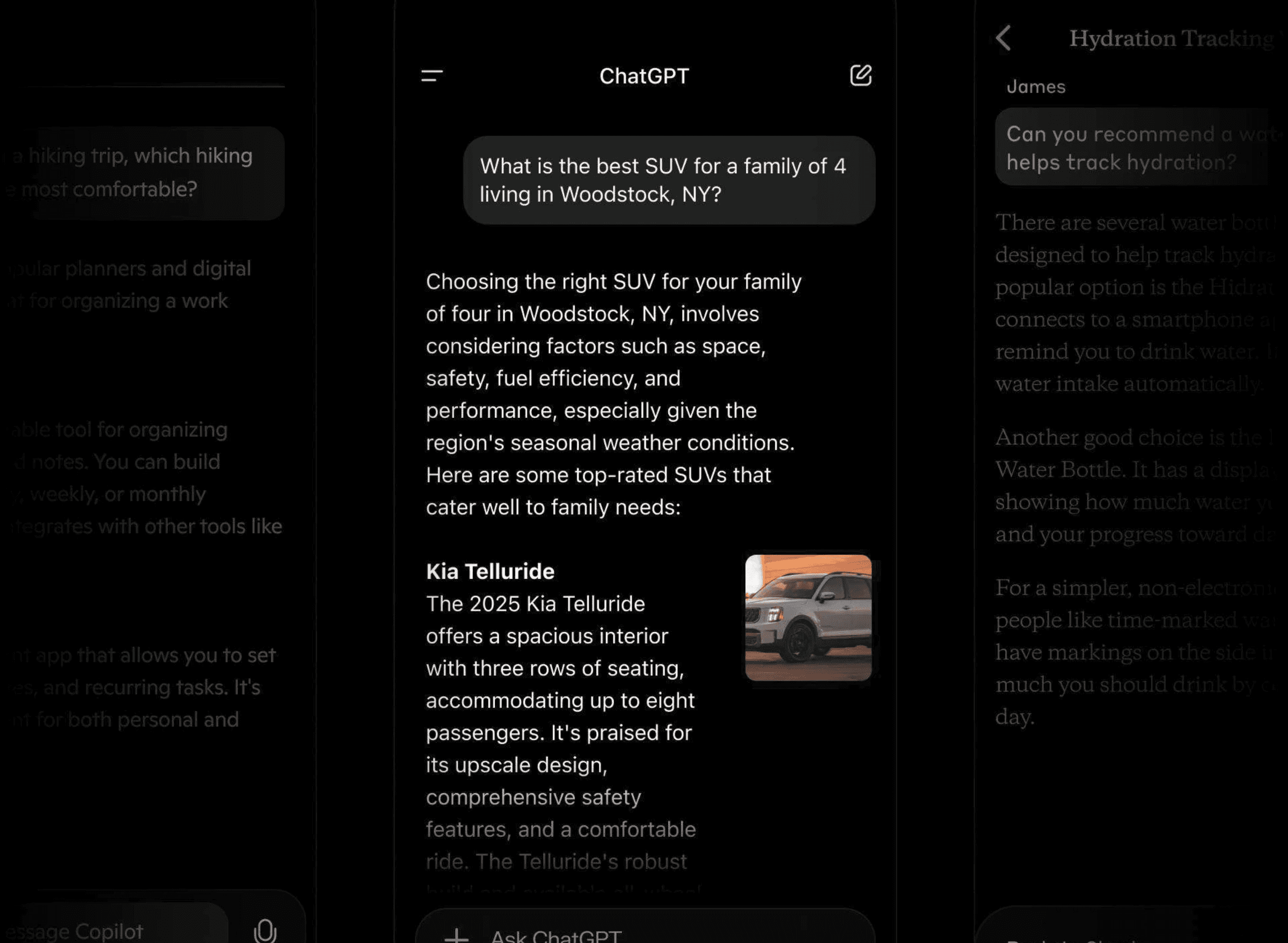
Check how often your brand gets mentioned
Do I need AI Presence for my business?
Frequently Asked Questions
Do I need AEO for my business?
AI shapes what your customers trust and who they choose. Platforms like ChatGPT and Google AI Overview have rapidly become go-to sources for trusted information. Real buying decisions now happen across a mix of invisible touchpoints - and a conversation with AI is one of them. We build the layer that validates your brand in those moments and helps drive conversions. Most brands haven’t caught up. Right now, the space is open, but once AI starts associating your category with another name, it becomes harder to shift. Securing your position early is foundational to long-term brand relevance.
How long until I see results?
It depends on your industry and average sales cycle. Most brands begin to see visibility shifts within 30–45 days that influence traction and brand awareness, especially across the invisible touchpoints where modern decisions happen: search, content, referrals, and increasingly, AI platforms. We track early movement, align it with your sales timeline, and refine from there. This isn’t a quick hit. It’s sustained brand positioning built to match how modern decisions are made.
How is performance measured?
We track results across multiple signals to connect AI visibility to real business outcomes. We monitor click-throughs coming from AI platforms. We track AI crawlers to understand how and when your brand is being indexed. We measure how often your brand is surfaced in relevant AI queries and how that compares to competitors. We watch for branded search trends to detect spikes in interest tied to visibility. We gather lead feedback by asking your team to flag customers who mention finding you through AI. And finally, we compare pre- and post-activation sales performance to assess lift across your full sales cycle.
Do I still need to do regular SEO?
Yes — but AI visibility operates on a different layer. Traditional SEO helps you rank on search engines. We focus on how your brand shows up inside AI platforms like ChatGPT and Google AI Overview, where rankings don’t exist — only references, relevance, and trust.
Do you replace my marketing team?
No. We work alongside them. Your team runs the channels — we shape the layer that feeds them. Our insights inform strategy, refine messaging, and strengthen visibility across AI platforms.
How do you know what AI says about us?
We run thousands of structured prompts daily across multiple AI engines, simulating a wide range of user intents tied to your brand, category, and competitors. We analyze how you’re positioned in outputs — including answers, summaries, side-by-sides, and recommendation contexts. Our system scans for frequency, sentiment, source attribution, and competitor proximity. The result is a multi-dimensional visibility map, which we translate into precise strategy and execution.
What kind of actions do you take?
Executions/Actions are the content and technical actions we take to improve how AI tools describe your brand. AI is changing everyday, and so the executions needed. Examples include: AI-optimized blog posts Website FAQ or copy edits Schema markup updates (JSON-LD) Reddit or Quora visibility (engagement or posting) PR Opps Fixes for incorrect or outdated info in AI summaries Anything we find relevant to you AI Visibility Everything is tied to your industry, visibility strategy, and current trends.
Do I need to give you access to my accounts?
Limited access is necessary. We need access to your website analytics and, depending on trends, support in creating or managing presence on platforms like Quora or Reddit - especially if you don’t already have a community manager in place.
Can you shift negative brand perception?
Yes — but not by covering it up. We identify where negative sentiment is coming from, understand why it’s being surfaced, and build a strategy to shift the narrative over time. That can include strengthening positive signals, refining messaging, and in some cases, removing harmful or outdated reviews when possible.