
Answer Engine Optimization (AEO) Guide 2025: A Step-by-Step Playbook
AI assistants are quickly becoming the first place people go to ask questions, compare options, and choose brands. ChatGPT, Google’s AI Overviews, Gemini, Bing Copilot, Perplexity, voice assistants: together they behave like a massive network of “answer engines.”
For most businesses, classic SEO alone is no longer enough. You now need to be discoverable inside the answers themselves, not just in the blue links under them.
This guide turns that shift into a practical playbook you can apply in 2025, written from U&AI’s perspective as a specialized AI visibility and optimization partner.
What answer engine optimization is and why it matters in 2025
In traditional SEO, the main goal was to rank web pages in search results. In answer engine optimization, the goal is to be the trusted source that AI systems use when they generate answers, summaries, and recommendations.
Definition box: What is Answer Engine Optimization (AEO)?
In simple language:
Answer engine optimization is the practice of structuring your information, content, and signals so that AI systems can easily understand, trust, and use your brand in the answers they give to users.
It is still grounded in SEO fundamentals, but it focuses on:
- Natural, conversational questions, not just short keywords
- Clear, concise answers that can be quoted or summarized
- Structured data and entities that machines can reliably interpret
- Signals of trust, expertise, and real-world satisfaction
Sources such as Conductor and Amsive describe AEO as an evolution of SEO that adapts content for AI systems that generate direct answers, not just lists of links (see https://www.conductor.com/academy/answer-engine-optimization/ and https://www.amsive.com/insights/seo/answer-engine-optimization-aeo-evolving-your-seo-strategy-in-the-age-of-ai-search/).
How AI overviews and assistants act as answer engines
Modern AI experiences behave like answer engines because they:
- Accept full questions in natural language, often with context
- Combine information from many sources into one synthesized reply
- Highlight or cite a few sources, often above the classic organic results
- Reduce the number of clicks needed to get an answer
Examples include:
- Google AI Overview: Surfaces a generated explanation at the top of results, then links to a few supporting pages.
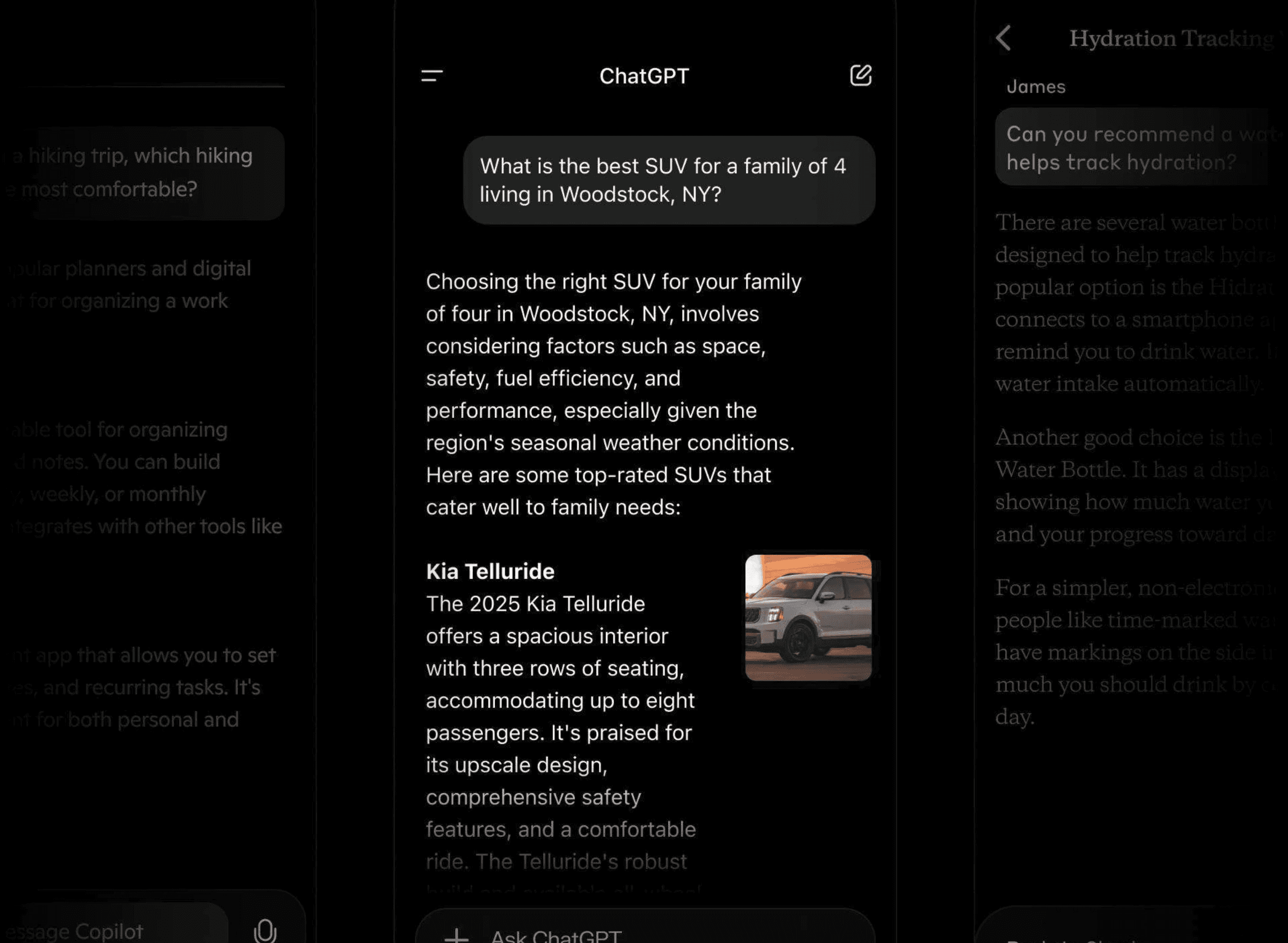
- ChatGPT / Gemini / Copilot: Return a conversational answer first, then sometimes show source links.
- Voice assistants: Read out one answer, often from a single primary source.
Why AEO now drives visibility, trust, and conversions
Because the “answer” comes before the list of links, brands that are cited or summarized in that answer gain:
- Visibility: You appear where attention is highest: inside the AI-generated explanation.
- Trust: Being selected as a cited source signals relevance and authority to users.
- Conversions: Users looking for “who should I hire” or “what is the best solution” are much closer to taking action.
Dallas Riffle, for example, highlights that optimizing for answer engines improves the conversational and voice experience, which increasingly shapes how people search and choose (https://dallasriffle.com/blog/2025/04/08/answer-engine-optimization-the-future-of-search-in-a-conversational-world/).
From U&AI’s perspective, AEO is about positioning your brand where today’s customer actually decides: inside AI-driven answers and recommendations, not just on page one of traditional search.
How AEO differs from traditional SEO in the AI search era
AEO is not a complete replacement for SEO. It builds on SEO foundations and shifts what you prioritize.
Side by side comparison: SEO vs AEO
Here is a simplified comparison.
| Aspect | Traditional SEO | Answer Engine Optimization (AEO) |
|---|---|---|
| Primary focus | Rank pages in search results for keywords | Be used and cited inside AI-generated answers |
| Core goal | Earn organic clicks from SERPs | Earn inclusion in summaries, recommendations, and voice responses |
| Optimization unit | Webpage and website | Entity (brand, people, products) plus content and data |
| Content style | Keyword-targeted, long-form articles and landing pages | Conversational, question-based, answer-first content |
| Data structure | Basic on-page SEO, sometimes schema | Comprehensive structured data, entity markup, clean knowledge signals |
| Surfaces | Classic search results, snippets, local pack | AI Overviews, assistants, chatbots, voice answers, snippets, local and review panels |
| Measurement | Rankings, organic traffic, CTR | Share of voice in AI answers, citation frequency, sentiment, assisted conversions |
Zero click searches and AI overviews
Zero click searches are queries where the user gets what they need without clicking any result. With AI Overviews and rich SERP features, this pattern is expanding:
- Users read the AI overview, confirm the answer is enough, then move on.
- They might remember the brand named in the answer even if they do not click.
In this context, you are optimizing not only for clicks, but also for:
- Being named and cited
- Being visually associated with the answer (logo, brand mention)
- Being recommended when users ask “best,” “top,” or “near me” questions
When SEO foundations are enough vs when AEO is needed
SEO foundations are usually enough if:
- You rely mostly on branded queries and direct traffic.
- You operate in a niche with low competition and little AI coverage.
- Your buyers use search lightly and convert through other channels.
AEO becomes essential when:
- Your customers use high-intent, conversational queries like “who is the best X for Y near me” or “what should I do if Z happens.”
- AI overviews already appear for your core topics and competitor names.
- Buyers compare options heavily before choosing: B2B, services, healthcare, local, finance, education, and similar.
In practice, most brands will need both: SEO to make your website technically sound and discoverable, and AEO to ensure AI systems truly understand and surface you in answers.
Core benefits of AEO for your business
AEO is a strategy upgrade, but it needs to connect to outcomes. Below are core benefits and how they show up for different types of brands.
1. Greater visibility inside AI-driven experiences
Benefit: Your brand appears in AI summaries, chat-style answers, and voice results where users focus their attention.
Examples:
- Service businesses: A home services company can be named when users ask “who fixes [issue] near me” in Google or in a voice assistant, not only in the map pack.
- Local businesses: A restaurant or clinic can be cited when people ask “where should I go for [need] around here.”
- B2B brands: Your solution can be recommended when buyers ask “what are the best platforms for [problem]” in research tools or AI assistants.
Public discussions of AEO, such as articles from Anytime Digital Marketing and Enaks, highlight visibility improvements as a key outcome, often measured by increases in impressions, mentions, and assistant citations, not just page rankings (https://anytimedigitalmarketing.com/2024/12/26/pros-and-cons-of-implementing-answer-engine-optimization-aeo and https://www.enaks.io/post/pros-and-cons-of-integrating-answer-engine-optimization).
2. Better user experience and trust
Benefit: Users benefit from faster, clearer answers that align with what they actually ask, which in turn builds trust in your brand’s expertise.
- Clear, structured answers reduce confusion and make you easier to work with.
- Consistent information across your site, profiles, and listings signals reliability.
For local and service brands, this can show up as fewer “clarification” calls and more “ready to book” inquiries. For B2B, it can mean prospects arrive already educated about your approach because AI assistants have summarized it accurately.
3. Higher-quality conversions, not just more traffic
Benefit: AEO encourages you to map content to real decision stages and tasks, such as “How do I choose a provider” or “What should I ask before signing a contract.”
This often leads to:
- More qualified inquiries who have already had their basic questions answered.
- Shorter sales cycles because buyers arrive with fewer unknowns.
- Better alignment between what you promise in content and what you deliver.
Case examples referenced by Enaks and other AEO practitioners often show that AEO-aligned content correlates with increases in lead quality metrics, even when overall traffic levels stay similar.
4. Stronger coverage for voice and conversational search
Benefit: Voice assistants and chat-style interfaces usually pick one main answer. AEO gives you a better chance to be that answer.
Dallas Riffle notes that designing content for natural language queries and concise responses makes it much more compatible with voice search and conversational interfaces. That direction is critical as more users rely on hands-free or quick Q&A formats in daily life.
5. Improved brand consistency across the web
Benefit: AEO pushes you to clean up and standardize your brand’s “facts”:
- Names, addresses, phone numbers
- Services and product categories
- Key people, locations, and credentials
- Policies, pricing models, and processes
This consistency helps AI systems connect all of your signals into a clear entity profile, and it reduces conflicting information that can erode trust with both machines and humans.
Step by step AEO playbook you can start today
This is a practical, 2025-ready process you can put into motion. U&AI typically helps brands across all of these steps, especially visibility tracking, entity modeling, and execution planning.
Step 1: Clarify your AI-era goals and audience tasks
- Identify your primary audiences and what they actually do: research, compare, troubleshoot, buy, renew.
- List the questions they ask at each stage in their words, including “how,” “who,” “what if,” “best,” and “near me” phrasing.
- Decide what a good outcome is for each: a call, a signup, a quote request, a booking, a download.
Step 2: Do conversational query research and intent mapping
Move beyond classic keyword lists into question and intent clusters:
- Use tools like Google Search Console, Bing Webmaster Tools, and keyword platforms to find “People also ask” and question queries.
- Talk to sales, support, and customer success to capture the real questions people ask.
- Group them by intent:
- Learn: “What is…,” “How does…work”
- Evaluate: “Best,” “compare,” “pros and cons”
- Act: “Who offers,” “how much,” “near me,” “book”
Map each group to:
- A primary page or experience you own
- Supporting FAQs or resources that deepen the answer
Step 3: Structure your site and content for answers
- Create or refine pages around core themes and intents instead of single keywords.
- Add clear answer sections at the top of key pages: 2 to 4 sentences that directly respond to the main question.
- Include scannable subheadings, bullet lists, and short sections that are easy for AI systems to extract or summarize.
- Build FAQ sections that reflect real queries, not just generic ones.
Step 4: Optimize for natural language and clarity
- Write as if you are responding to a human asking a question, not a bot scanning for keywords.
- Use plain language definitions for important terms and processes.
- Cover “follow up” questions in the same page when they naturally arise.
- Give balanced, honest answers, including limitations and tradeoffs, which supports trust.
Resources like Conductor and CXL emphasize that natural language optimization helps AEO because it mirrors how users speak to assistants (https://www.conductor.com/academy/answer-engine-optimization/ and https://cxl.com/blog/answer-engine-optimization-aeo-the-comprehensive-guide-for-2025/).
Step 5: Strengthen entities and structured data
AI systems rely heavily on structured data and entities to understand who you are and what you do.
- Implement schema.org markup for:
- Organization / LocalBusiness
- Product / Service
- FAQPage and HowTo where appropriate
- Article / BlogPosting for content pieces
- Ensure your business details are consistent across your website, Google Business Profile, and major directories.
- Connect your brand to relevant entities: industries, technologies, locations, and topics you want to be associated with.
Step 6: Build local and review signals that feed answer engines
For local and service brands especially:
- Fully optimize your Google Business Profile with accurate categories, services, and attributes.
- Earn steady, authentic reviews that mention your services and locations in natural language.
- Keep hours, contact details, and service areas up to date on your site and listings.
These signals feed directly into local AI recommendations and “near me” responses.
Step 7: Monitor your AI share of voice and sentiment
This is where U&AI focuses heavily:
- Track where and how often your brand is mentioned in AI assistants and AI Overviews compared to competitors.
- Monitor whether mentions are positive, neutral, or negative.
- Identify which topics, questions, or use cases you are strong or weak in.
This gives you an “AI visibility baseline” instead of guessing how you show up.
Step 8: Iterate with testing and content refinement
- Test variations of how you structure answers, FAQs, and schema.
- Expand into new question clusters as you discover them in logs and AI responses.
- Update content regularly to keep it accurate and aligned with how your market speaks.
Over time, this turns AEO from a one-time project into an ongoing capability.
AEO implementation checklist for 2025
Use this summarized checklist to get started:
- Define top 5 to 10 audience tasks and question clusters.
- Map those questions to existing or new pages on your site.
- Add clear, concise answer sections to key pages.
- Create or refine FAQs based on real customer language.
- Implement organization, local, FAQ, and article schema where relevant.
- Audit and align business details across your site and major profiles.
- Improve review volume and quality, prioritizing natural language mentions.
- Start tracking AI assistant responses that mention your brand and competitors.
- Prioritize gaps where competitors are cited and you are not.
- Schedule quarterly reviews to update content and entities.
Tools, quick wins, and common AEO mistakes to avoid
You do not need an advanced tech stack to begin AEO, but specific tools can help you move faster.
Helpful tools for AEO and SEO
- Google Search Console and Bing Webmaster Tools: Understand queries, impressions, and performance.
- Keyword and SERP tools (for example, widely used platforms like Semrush or Ahrefs): Discover question-based queries and SERP features.
- Schema markup generators and validators (such as schema.org resources and Google’s Rich Results Test at https://search.google.com/test/rich-results): Implement and validate structured data.
- HubSpot AEO Grader (https://www.hubspot.com/aeo-grader): Assess your current readiness for answer engines and receive directional recommendations.
- Log and monitoring tools: Track how users phrase questions in search, chatbots, and onsite search.
Quick win AEO checklist for the next 30 days
If you have limited time, focus on these moves that usually produce visible progress quickly:
- Identify your top 5 revenue-driving pages and add 2 to 4 sentence answer summaries at the top of each.
- Add a tightly written FAQ section to your top service or product page, based on real customer questions.
- Implement FAQPage schema for that FAQ section so search engines and AI systems can read it cleanly.
- Audit and correct business name, address, phone, and hours across your website and Google Business Profile.
- Ask recent happy customers to leave honest, detailed reviews that mention what they liked and which service they used.
- Run your site through an AEO readiness tool such as HubSpot’s AEO grader to spot gaps you may have missed.
Common AEO mistakes and how to fix them
- Treating AEO as “just more keywords.”
Fix: Focus on real questions and tasks, not just additional phrases to target. - Ignoring structured data and entities.
Fix: Implement schema markup for your organization, content, and FAQs, and keep it updated. - Creating generic FAQs that nobody actually asks.
Fix: Source questions from sales, support, reviews, and real search queries. - Over-optimizing for AI and under-serving humans.
Fix: Make content genuinely helpful and clear, then refine structure for machines without sacrificing readability. - Letting profiles and listings go stale.
Fix: Set a recurring schedule to review and update business details and key profiles. - Not measuring AI visibility at all.
Fix: Periodically test your brand and topics in major AI assistants and document when you appear and how you are described.
How U&AI approaches AEO and the future of AI search
As a specialized AI visibility and optimization partner, U&AI is built specifically for this era of AI-driven discovery.
How U&AI helps brands with AEO
U&AI typically supports brands in three interconnected areas:
1. AI visibility tracking and share of voice
- Monitoring how often AI systems mention your brand for specific topics and questions.
- Comparing that visibility against key competitors and alternatives.
- Tracking how you are framed: what benefits, drawbacks, and use cases are highlighted.
2. Strategic AEO planning
- Translating AI visibility insights into a prioritized roadmap of content, structured data, and entity work.
- Aligning this roadmap with your broader SEO and marketing strategy so efforts reinforce each other.
- Defining measurement frameworks that include AI share of voice, citation patterns, and assisted conversions.
3. Execution and refinement
- Supporting the creation or revision of answer-first content, FAQs, and resource hubs.
- Implementing and validating structured data and entity improvements.
- Iterating based on changes in AI responses and human behavior.
Example style outcomes
Without naming specific clients, AEO-focused work often results in shifts such as:
- Moving from “rarely mentioned” to “consistently referenced” in AI answers for key commercial queries.
- Expanding from being cited for only branded questions to being included in “best X for Y” or “who should I choose for Z” scenarios.
- Improving the alignment between how AI assistants describe a brand and how that brand wants to be perceived.
Key AEO trends for 2025 and what to do now
Looking at industry analysis from sources like CXL and Amsive, as well as our own observations, several trends stand out for 2025:
- Deeper reasoning in AI answers: Assistants are getting better at multi-step, evaluative responses. Action: Provide nuanced, well-structured content that can feed those deeper explanations.
- Vertical and specialized models: Niche AI tools in health, finance, legal, and B2B software are gaining traction. Action: Ensure your brand is visible and understood within the specific ecosystems your buyers use.
- Greater focus on trust and provenance: Users and platforms are both paying more attention to source quality and transparency. Action: Invest in authoritative, well-sourced content, clear author information, and consistent brand facts.
- More multimodal discovery: Search is blending text, images, and video in AI responses. Action: Structure and describe your visual and video assets so they can be discovered and reused.
If you want your brand to thrive as AI reshapes discovery, this is the time to:
- Solidify your SEO fundamentals.
- Layer AEO practices on top, starting with questions, answers, entities, and structured data.
- Begin tracking how AI systems already talk about you.
To explore how this could look for your brand, you can learn more about U&AI at https://uandai.co and consider a conversation about your AI visibility goals.
FAQ: Answer Engine Optimization in 2025
Is AEO replacing SEO?
No. AEO builds on top of SEO rather than replacing it. You still need technical health, crawlable content, and a solid site experience. AEO extends that work so your brand is better understood and surfaced by AI answer engines, not just by traditional search algorithms.
Do small and local businesses really need AEO?
Yes, especially if your customers use “near me,” “who should I call,” or “best [service] in [city]” queries. Local and service brands are heavily impacted by AI Overviews, maps, and voice answers. Even simple steps like better FAQs, consistent listings, and basic schema can make a difference.
How long does it take to see results from AEO?
Timing varies by industry, competition, and how strong your current foundations are. Some quick wins, such as better FAQs and structured data, can influence how search engines and assistants display your information in a few weeks, while deeper shifts in AI share of voice tend to show over several months of consistent effort.
Do I need advanced AI tools to implement AEO?
Not to start. You can make meaningful progress using existing SEO tools, search console data, and schema validators. Over time, specialized AI visibility tracking, like what U&AI focuses on, helps you optimize more precisely and measure how AI assistants actually describe and recommend your brand.
What should I prioritize first if my resources are limited?
Begin with the high-impact basics:
- Identify your top revenue-driving pages and add clear answer sections.
- Build or refine FAQs based on real customer questions.
- Implement core schema for your business and FAQs.
- Clean up your Google Business Profile and key listings.
Once those are in place, you can move into more advanced entity work and AI share of voice tracking.
Check how often your brand gets mentioned
Do I need AI Presence for my business?
Frequently Asked Questions
Do I need AEO for my business?
AI shapes what your customers trust and who they choose. Platforms like ChatGPT and Google AI Overview have rapidly become go-to sources for trusted information. Real buying decisions now happen across a mix of invisible touchpoints - and a conversation with AI is one of them. We build the layer that validates your brand in those moments and helps drive conversions. Most brands haven’t caught up. Right now, the space is open, but once AI starts associating your category with another name, it becomes harder to shift. Securing your position early is foundational to long-term brand relevance.
How long until I see results?
It depends on your industry and average sales cycle. Most brands begin to see visibility shifts within 30–45 days that influence traction and brand awareness, especially across the invisible touchpoints where modern decisions happen: search, content, referrals, and increasingly, AI platforms. We track early movement, align it with your sales timeline, and refine from there. This isn’t a quick hit. It’s sustained brand positioning built to match how modern decisions are made.
How is performance measured?
We track results across multiple signals to connect AI visibility to real business outcomes. We monitor click-throughs coming from AI platforms. We track AI crawlers to understand how and when your brand is being indexed. We measure how often your brand is surfaced in relevant AI queries and how that compares to competitors. We watch for branded search trends to detect spikes in interest tied to visibility. We gather lead feedback by asking your team to flag customers who mention finding you through AI. And finally, we compare pre- and post-activation sales performance to assess lift across your full sales cycle.
Do I still need to do regular SEO?
Yes — but AI visibility operates on a different layer. Traditional SEO helps you rank on search engines. We focus on how your brand shows up inside AI platforms like ChatGPT and Google AI Overview, where rankings don’t exist — only references, relevance, and trust.
Do you replace my marketing team?
No. We work alongside them. Your team runs the channels — we shape the layer that feeds them. Our insights inform strategy, refine messaging, and strengthen visibility across AI platforms.
How do you know what AI says about us?
We run thousands of structured prompts daily across multiple AI engines, simulating a wide range of user intents tied to your brand, category, and competitors. We analyze how you’re positioned in outputs — including answers, summaries, side-by-sides, and recommendation contexts. Our system scans for frequency, sentiment, source attribution, and competitor proximity. The result is a multi-dimensional visibility map, which we translate into precise strategy and execution.
What kind of actions do you take?
Executions/Actions are the content and technical actions we take to improve how AI tools describe your brand. AI is changing everyday, and so the executions needed. Examples include: AI-optimized blog posts Website FAQ or copy edits Schema markup updates (JSON-LD) Reddit or Quora visibility (engagement or posting) PR Opps Fixes for incorrect or outdated info in AI summaries Anything we find relevant to you AI Visibility Everything is tied to your industry, visibility strategy, and current trends.
Do I need to give you access to my accounts?
Limited access is necessary. We need access to your website analytics and, depending on trends, support in creating or managing presence on platforms like Quora or Reddit - especially if you don’t already have a community manager in place.
Can you shift negative brand perception?
Yes — but not by covering it up. We identify where negative sentiment is coming from, understand why it’s being surfaced, and build a strategy to shift the narrative over time. That can include strengthening positive signals, refining messaging, and in some cases, removing harmful or outdated reviews when possible.